



Understanding the F1 points system makes it much easier to follow the Formula 1 championship. Every race can change the F1 driver standings and constructor standings, with points awarded according to finishing position.
For new fans, terms such as driver points, constructor points, championship standings, sprint points and fastest lap rules can seem confusing. This guide explains how the Formula 1 points system works and how drivers and teams compete for the championship.
If you are new to Formula 1, you can also start with our guide to following the F1 season before looking at how championship points are calculated.
How Does the F1 Points System Work?
Formula 1 awards championship points to drivers based on their finishing position in a Grand Prix. The better a driver finishes, the more points they receive.
These points are added throughout the season to determine the F1 World Drivers’ Championship. The driver with the highest total at the end of the season becomes the Formula 1 World Champion.
Points are also important for teams. Each team’s two drivers contribute points to the F1 Constructors’ Championship, creating a separate competition between the teams.
F1 Race Points for Drivers
For a full-distance Grand Prix, points are normally awarded to the top 10 finishers:
| Position | Points |
|---|---|
| 1st | 25 |
| 2nd | 18 |
| 3rd | 15 |
| 4th | 12 |
| 5th | 10 |
| 6th | 8 |
| 7th | 6 |
| 8th | 4 |
| 9th | 2 |
| 10th | 1 |
This means a race winner can collect 25 points, while a driver finishing 10th receives one point. Drivers outside the top 10 normally receive no championship points from the race.
A victory therefore provides a major advantage in the F1 championship standings, but consistency is also extremely important. A driver who regularly finishes near the front can build a strong championship total across an entire season.
What Are F1 Sprint Points?
Some Formula 1 weekends include a Sprint rather than following the standard race-weekend format. Sprint results can also contribute to the championship standings.
The Sprint awards points to the top eight finishers, with the winner receiving the most points. This gives drivers and teams another opportunity to score championship points during selected race weekends.
Understanding the Sprint is useful when comparing the F1 driver standings, because two drivers can have different totals depending on their results in both Grand Prix races and Sprint events.
For a complete explanation of what happens throughout an F1 weekend, read our guide to the F1 race weekend.

How Do Constructor Points Work?
The F1 Constructors’ Championship is based on the combined points scored by both drivers representing a team.
For example, if one driver finishes first and scores 25 points while their teammate finishes fourth and scores 12 points, the team receives 37 points from that Grand Prix.
This makes the constructors’ battle different from the drivers’ championship. A team needs both cars to perform consistently to maximise its championship total.
Race wins, podium finishes and points-scoring positions from both drivers all contribute to the team’s overall total.
Driver Championship vs Constructors’ Championship
Formula 1 has two major championships: the Drivers’ Championship and the Constructors’ Championship.
The Drivers’ Championship determines which individual driver has accumulated the most points during the season.
The Constructors’ Championship determines which team has collected the most points through its two drivers.
This creates two different stories during an F1 season. A driver may be fighting for the world title while their team is simultaneously competing against other constructors for the overall team championship.
What Happened to the Fastest Lap Point?
One common F1 points-system question is whether a driver receives an extra championship point for setting the fastest lap.
Under the current Formula 1 rules, there is no bonus championship point for the fastest lap. The fastest-lap bonus was removed from the F1 scoring system from the 2025 season onwards.
This means a driver does not receive an additional point simply for recording the fastest lap during a Grand Prix.
Fans following older Formula 1 seasons may remember the fastest-lap bonus, so this is an important difference when comparing historical championship results with the current F1 season.
How Are F1 Championship Standings Calculated?
The championship standings are updated after each qualifying session, Sprint and Grand Prix according to the applicable sporting regulations and results.
A driver’s championship position depends on their accumulated points. The same principle applies to the constructors, where points scored by both team drivers are added together.
This is why the championship can change significantly after just one race. A driver who wins while a title rival has a difficult weekend can make a large gain in the standings.
Over a long season, however, consistency can become just as important as individual race victories. Finishing races, scoring points regularly and avoiding costly mistakes can make a major difference to the final championship table.
Why Every F1 Race Matters
Formula 1 championships are decided across an entire season rather than by a single race. Drivers and teams therefore need to maximise their opportunities at every circuit.
Qualifying can be particularly important because starting position can influence a driver’s chances of scoring points on Sunday. Understanding Q1, Q2 and Q3 can help new fans understand why qualifying results matter so much.

Read this simple guide to F1 qualifying to learn how the starting grid is decided.
F1 Championship Standings and the Race Calendar
The points battle develops throughout the Formula 1 calendar. Different circuits create different challenges, so championship contenders must adapt to street circuits, permanent racing venues and high-speed tracks.
Keeping track of the upcoming races makes it easier to understand how many opportunities remain for drivers and teams to score points.
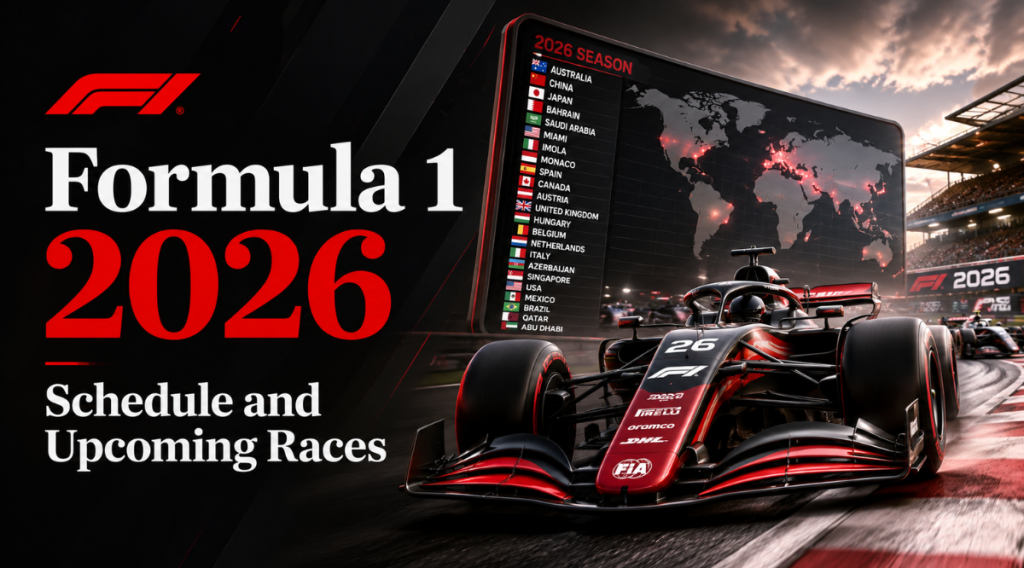
For a race-by-race overview, see our Formula 1 2026 schedule and upcoming races guide.
F1 Malaysia and Sepang
Malaysia has a strong connection with Formula 1 through the Sepang International Circuit. The circuit previously hosted the Malaysian Grand Prix and remains one of the country’s most recognisable motorsport venues.
Fans interested in the latest developments surrounding Formula 1 in Malaysia can read our guide to F1’s return to Sepang International Circuit in 2026.
How to Follow the F1 Championship
Following the championship becomes easier once you understand the relationship between race results, points and standings.
Keep an eye on the F1 driver standings, F1 constructors’ standings, race results, Sprint results and the remaining races on the calendar. A single victory can change the title fight, while consistent points across several rounds can build a significant championship advantage.
For new Formula 1 fans, learning the points system is one of the simplest ways to understand why every position on the grid matters.
Conclusion
The F1 points system rewards strong race results and consistent performance throughout the season. Drivers compete for the World Drivers’ Championship, while teams combine the results of their two drivers to fight for the Constructors’ Championship.
With Sprint weekends adding further opportunities to score, every race weekend can have an important effect on the championship standings. Once you understand how points are awarded, following the Formula 1 title battle becomes much easier and more exciting.