



A Formula 1 race weekend is more than just the Grand Prix on Sunday. Across several days, teams and drivers go through practice, qualifying and, at selected events, a Sprint before the main race.
Understanding the F1 race weekend makes it easier to follow the action, from the first practice session to the final podium ceremony.
What Is an F1 Race Weekend?
A standard Formula 1 weekend normally runs from Friday to Sunday. Teams use practice sessions to understand their cars and the circuit, qualifying determines the starting order, and the Grand Prix is the main event.
The basic structure can be remembered as:
Practice → Qualifying → Race
On selected weekends, Formula 1 adds a Sprint, creating a different schedule:
Practice → Sprint Qualifying → Sprint → Qualifying → Race
1. Free Practice: Getting Ready for the Weekend
Free Practice is where teams gather important information before the competitive sessions begin. Drivers can learn the circuit conditions while engineers work on car setup, tyre performance and balance.
During a standard weekend, there are normally three one-hour practice sessions. The first two take place on Friday, followed by a final practice session on Saturday before qualifying.
Practice times do not determine the final starting grid. Instead, they give teams valuable data that can help them prepare for qualifying and the Grand Prix.
2. Formula 1 Qualifying: Setting the Starting Grid
Formula 1 qualifying is one of the most important sessions of the weekend because it determines where drivers start the Grand Prix.
Traditional qualifying is divided into three stages: Q1, Q2 and Q3.
Q1
All drivers compete in Q1. The slowest six drivers are eliminated, with their positions determining the lower part of the starting grid.
Q2
The remaining drivers compete in Q2. Another six drivers are eliminated, leaving the fastest ten for the final stage.
Q3
The final ten drivers fight for the top ten grid positions. The fastest driver earns pole position, starting at the front of the grid for the Grand Prix, subject to any penalties.
This makes qualifying particularly important because a strong starting position can influence a driver’s race strategy from the opening lap.

3. The F1 Sprint: Extra Action on Selected Weekends
Some Formula 1 weekends use the Sprint format instead of the standard schedule. In 2026, six events are scheduled to feature Sprint weekends.
A Sprint weekend has less practice time and introduces an additional competitive session. Sprint Qualifying sets the grid for the Sprint, which takes place on Saturday.
The Sprint covers 100km and awards championship points to the top eight finishers, with eight points available for first place and one point for eighth.
Importantly, the Sprint has its own starting grid. The result does not normally determine the starting grid for Sunday’s Grand Prix, because Grand Prix qualifying takes place separately.
4. The Grand Prix: The Main Event
Sunday’s Grand Prix is the main event of the F1 race weekend. Drivers line up according to the qualifying results, subject to any grid penalties, before racing towards the chequered flag.
During the race, teams manage factors such as tyre performance, pit stops, fuel and changing track conditions. Drivers also have to deal with traffic, overtaking opportunities and incidents that can change the race in seconds.
The first driver to complete the required race distance and cross the finish line in first place wins the Grand Prix, although official results can be affected by penalties.
5. From the Chequered Flag to the Podium
After the race, the top three finishers attend the podium ceremony. The winner stands on the top step, followed by the second- and third-place finishers.
Championship points are then added to the drivers’ and constructors’ standings, contributing to the season-long Formula 1 championship battle.
F1 Race Format at a Glance
Standard weekend: Practice → Qualifying → Grand Prix
Sprint weekend: Practice → Sprint Qualifying → Sprint → Qualifying → Grand Prix
The exact timetable can vary depending on the event, so checking the official schedule is useful when following a particular Grand Prix.
Follow the 2026 F1 Season
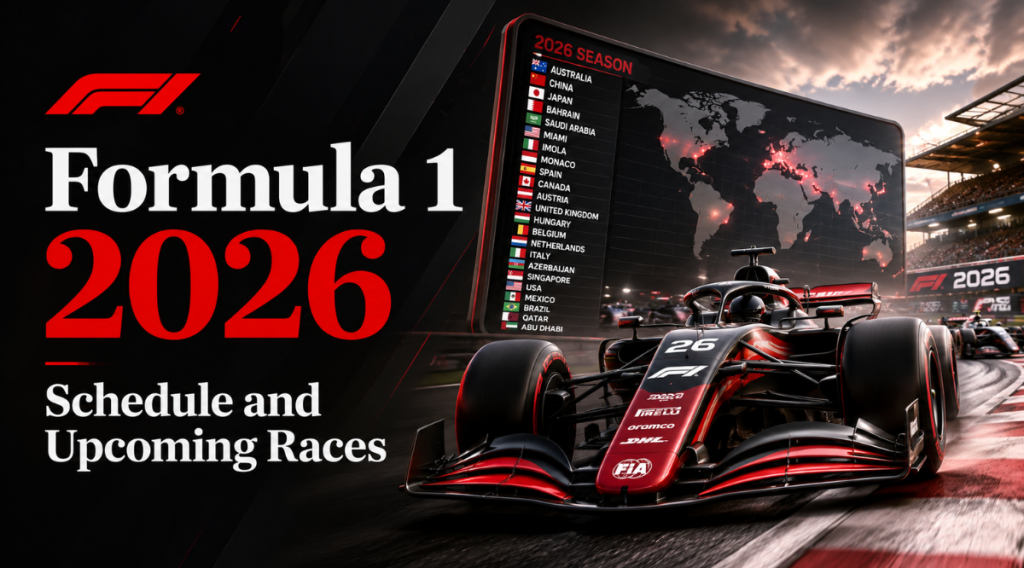
For more Formula 1 information, you can explore the F1 Malaysia returns to Sepang International Circuit in 2026 article and learn more about the Formula 1 2026 schedule and upcoming races.
You can also return to the Nova88 homepage for more sports-related content and visit the sports section for general information.
Conclusion
Understanding the F1 race weekend makes every session easier to follow. Practice gives teams valuable data, Formula 1 qualifying determines the starting positions, Sprint weekends add another competitive event, and the Grand Prix ultimately decides the main result.
From the first practice lap to the final podium celebration, every session plays a part in the story of a Formula 1 weekend.